.png)

.jpg)
.png)
.jpg)

.jpg)
ROUTINE MAINTENANCE
For daily cleaning of the surface, simply use a slightly damp microfiber cloth or sponge. For periodic cleaning, a neutral detergent applied with a soft sponge or microfiber cloth is usually sufficient, using appropriate spray dispensers. Always read the instructions on the detergent label before use. If ceramic is not listed among washable surfaces, it is better to use plain water.
STUBBORN STAINS
If the cleaning described above is not enough to remove tougher residues, treat the area locally using a sponge with moderation. If necessary, combine the sponge with a degreasing product. Always read the instructions on the detergent label before use.
USAGE PORECAUTIONS
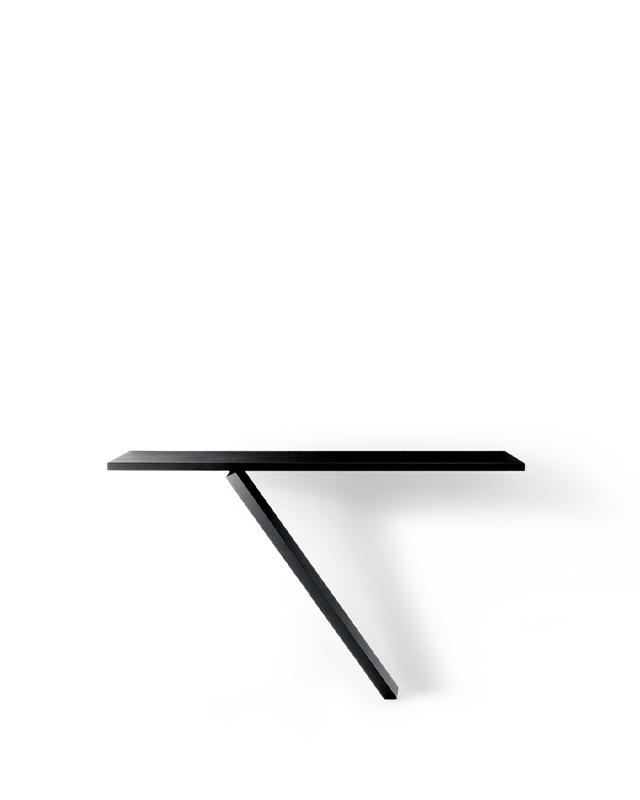
Avoid impacts, particularly on delicate points such as edges and corners. Do not pour large amounts of water on the porcelain stoneware top, especially to prevent water from seeping between the top and the supporting structure, which could potentially damage the underlying frame. For all cleaning operations, it is recommended to test the product on a small, inconspicuous area, leaving it in contact with the surface only for the minimum time necessary.
Ceramic
Porcelain stoneware represents one of the most advanced and versatile solutions for creating table tops. This material, renowned for its mechanical and chemical resistance, combines aesthetic quality with technical performance, ensuring durable, stable, and easy-to-maintain surfaces. The characteristics of porcelain stoneware allow for large-format tops that are uniform and free of defects, while maintaining visual lightness and harmonious proportions. Thanks to the variety of textures available, ceramic enables the full expression of design language, adapting perfectly to contemporary settings and projects that require functional, elegant, and high-quality solutions.
.jpg)
At Desalto, every material included in the collections is chosen with great care. Among these, ceramic (porcelain stoneware) plays a leading role thanks to its technical properties and aesthetic versatility. It is a material made from natural clays and minerals, compacted and fired at very high temperatures, ensuring resistance, stability, and uncompromising durability.
.jpg)
.jpg)
.jpg)
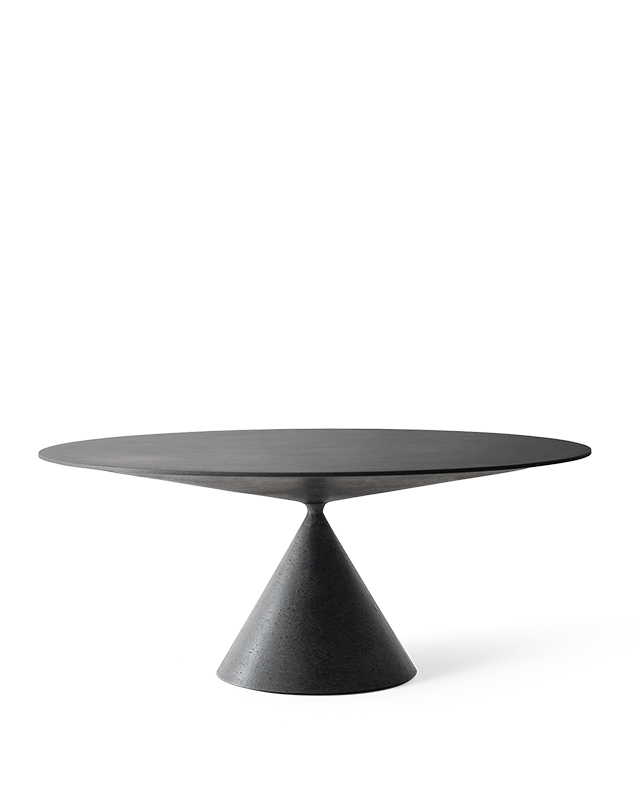
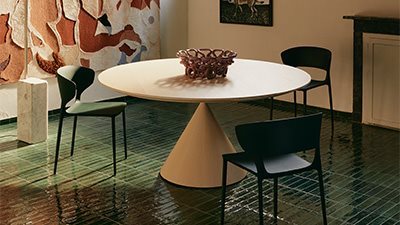
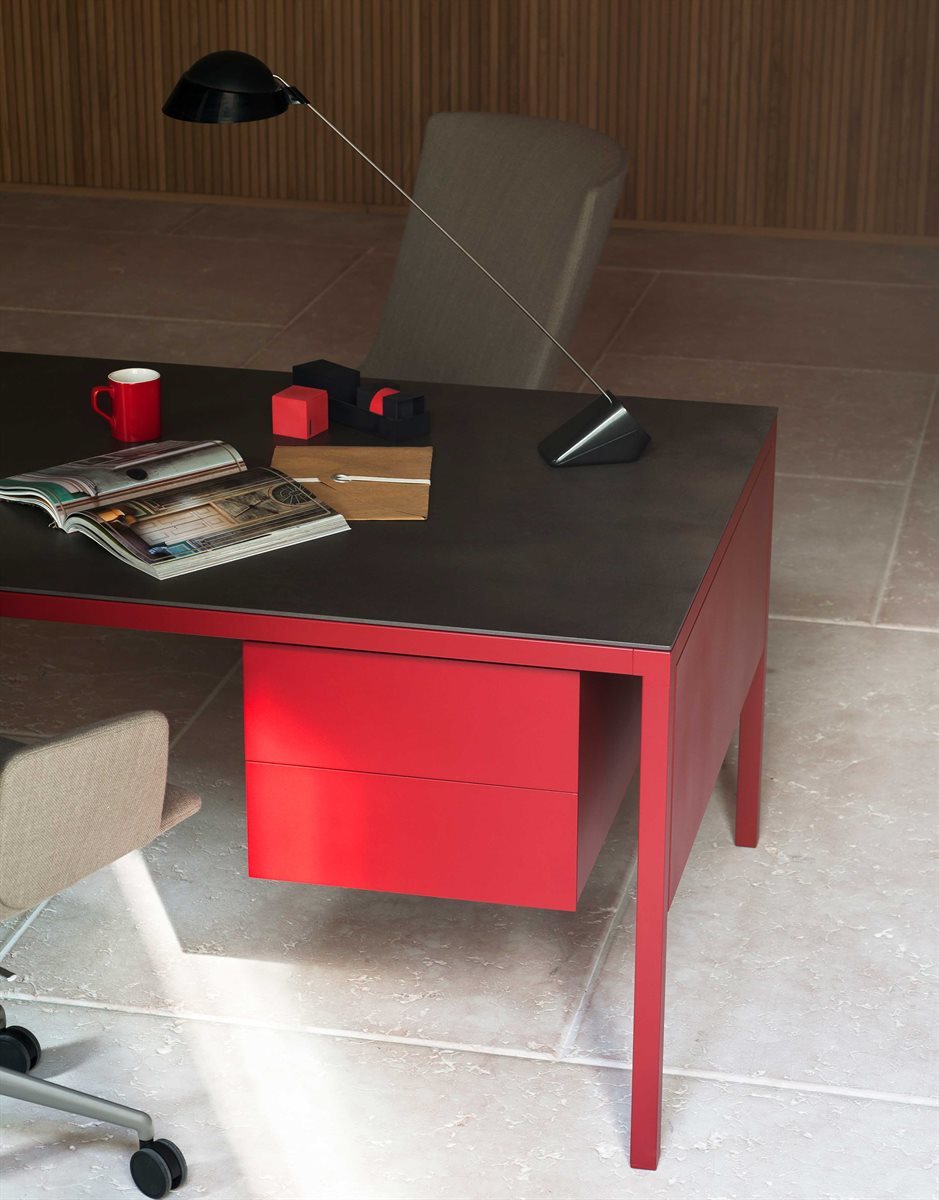
Desalto offers ceramic as a material for table and coffee table tops because it perfectly meets the demands of daily use: it is resistant to scratches, stains, and heat, does not absorb liquids, and is extremely easy to clean. Furthermore, thanks to the availability of finishes that mimic marble, stone, and contemporary textured effects, it combines functionality and elegance in a single solution.
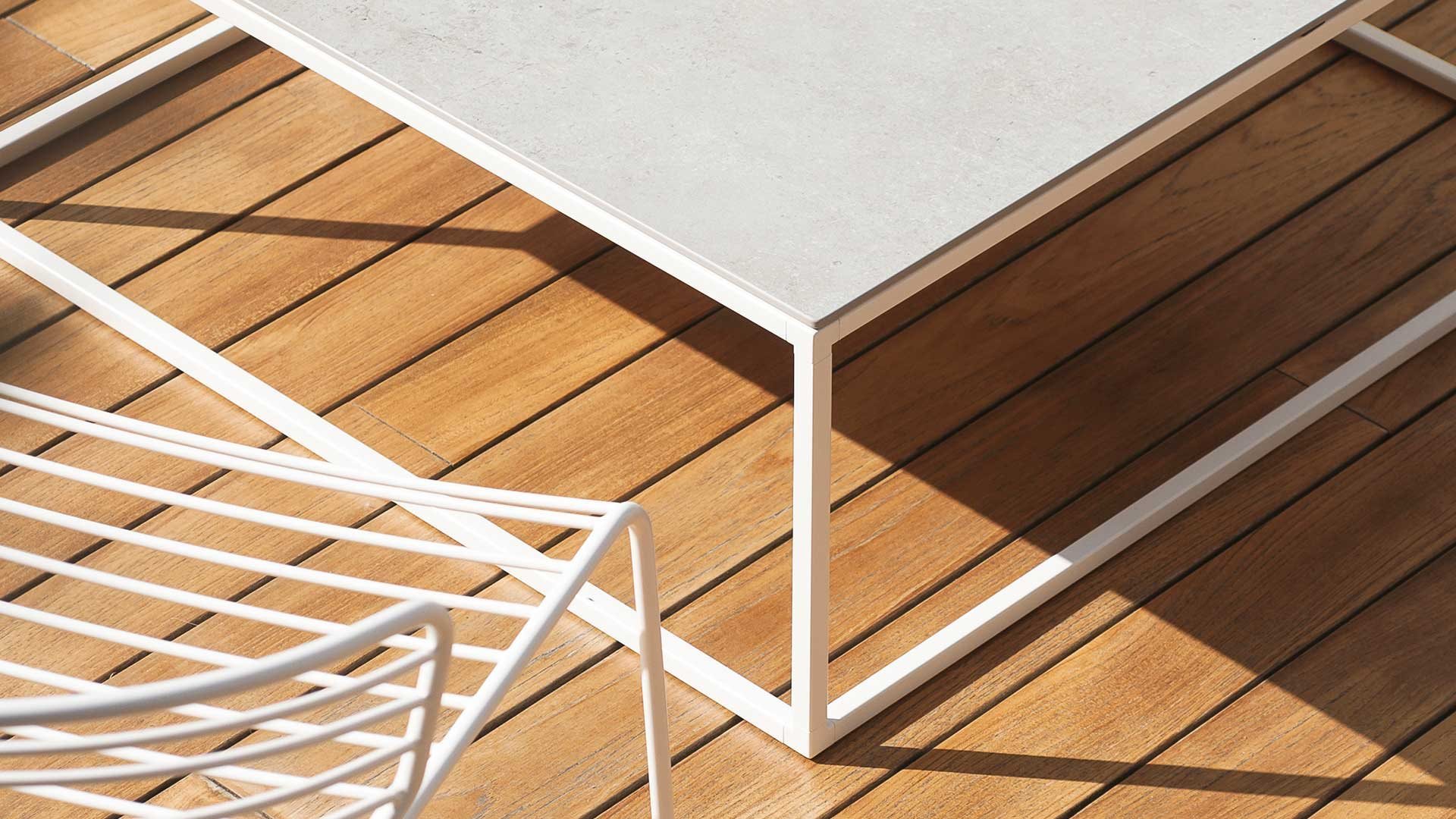
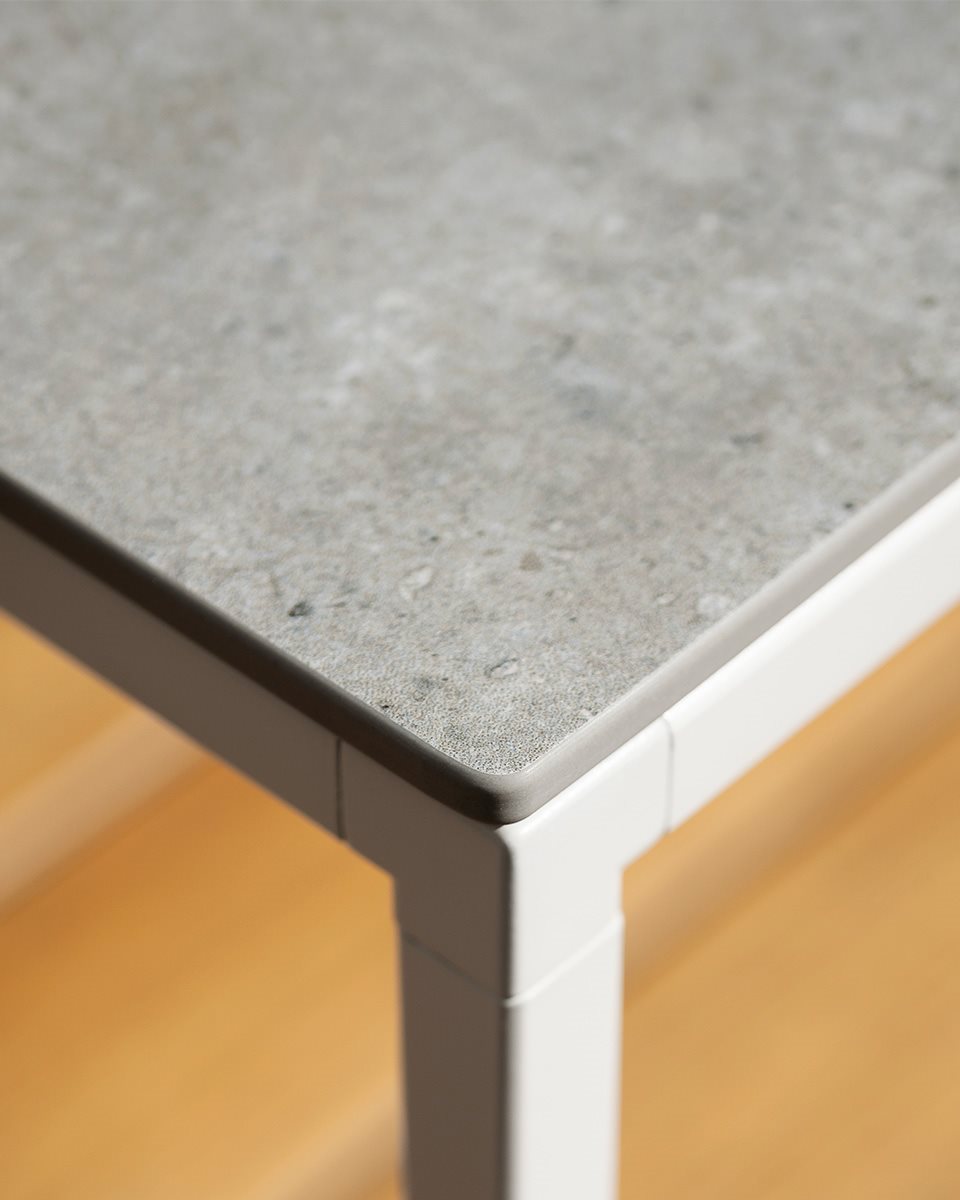
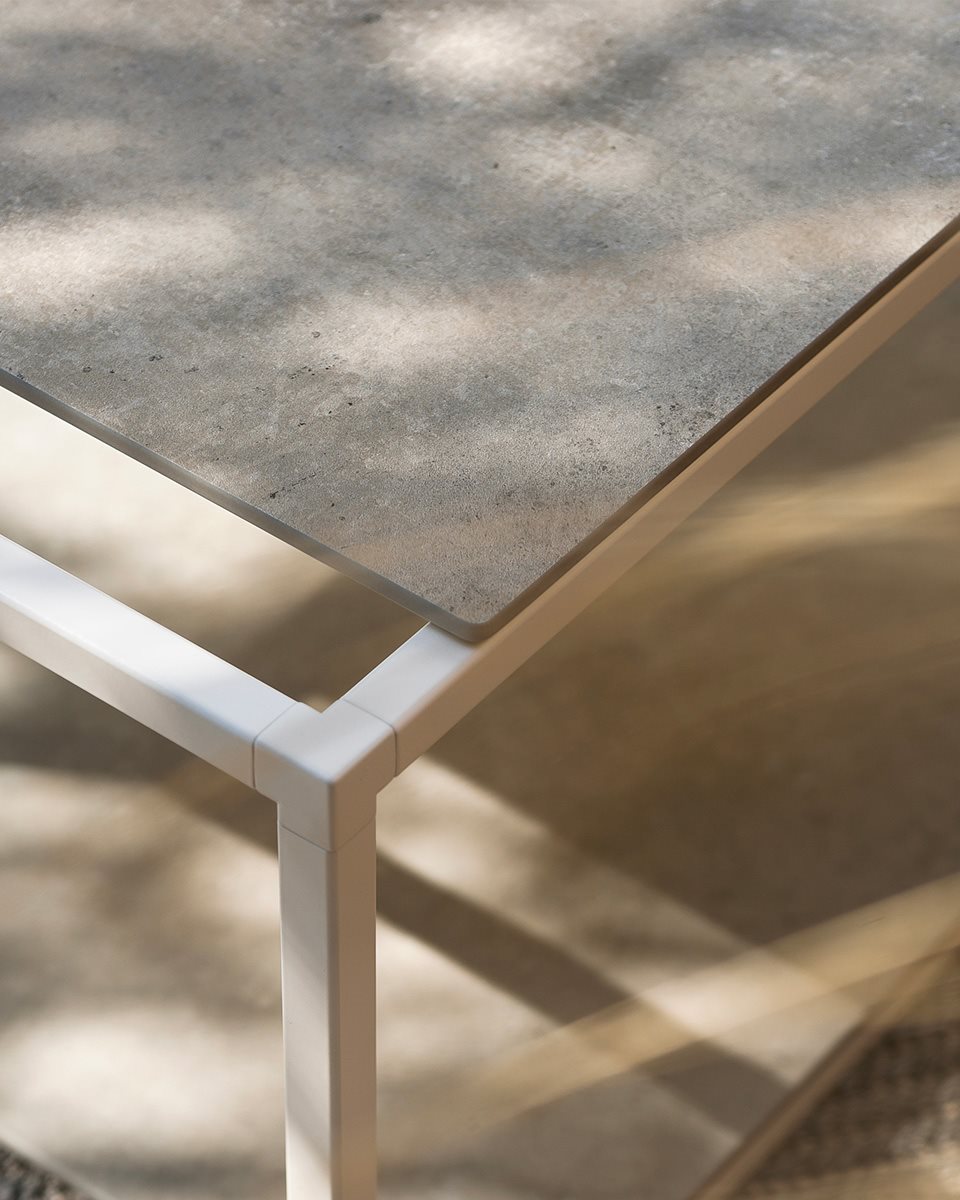
For tables designed for outdoor use, ceramic represents an excellent choice. Resistant to weathering, UV rays, and temperature fluctuations, it maintains its aesthetic and functional qualities over time without the need for protective treatments. Cleaning is simple and non-invasive: a damp cloth is sufficient to remove dust or residues, ensuring surfaces remain intact and easy to maintain. With ceramic, Desalto tables and coffee tables stand out for their ability to combine design and reliability, making them ideal solutions for both indoor and outdoor spaces.
Technical Area - Ceramic
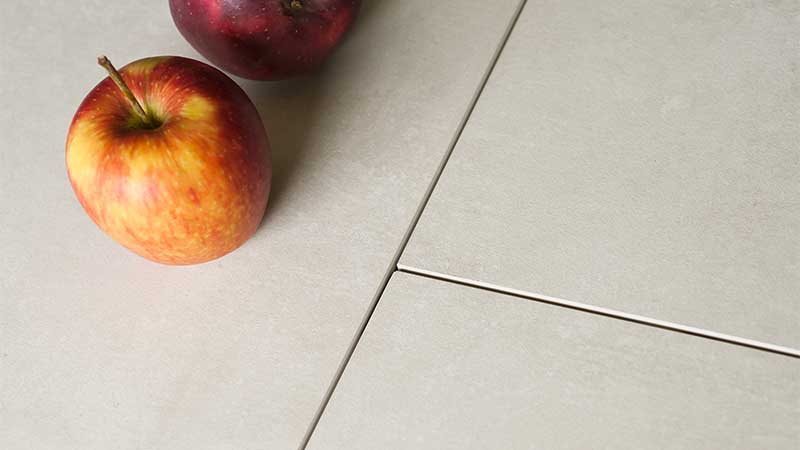
The choice of material to use thus becomes fundamental, and among all materials available on the market, porcelain stoneware certainly ranks among the best due to its technical and aesthetic qualities. The transformation of natural raw materials, combined with the use of innovative production technologies, allows for the creation of materials with high technical performance, distinguished by the characteristic effects long associated with natural materials.
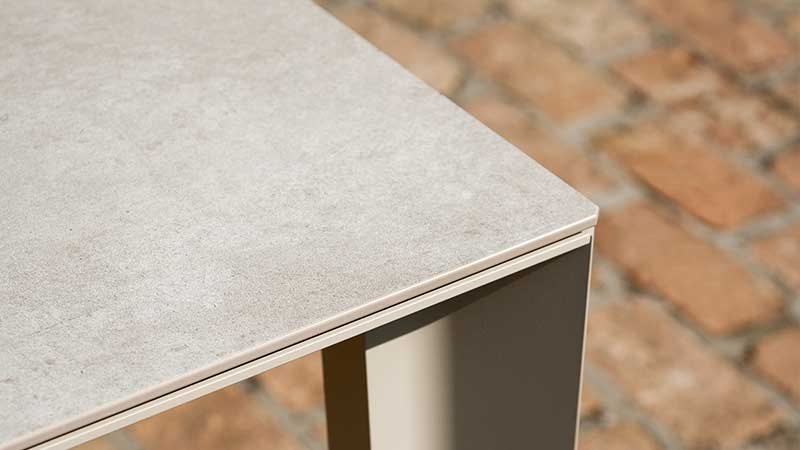
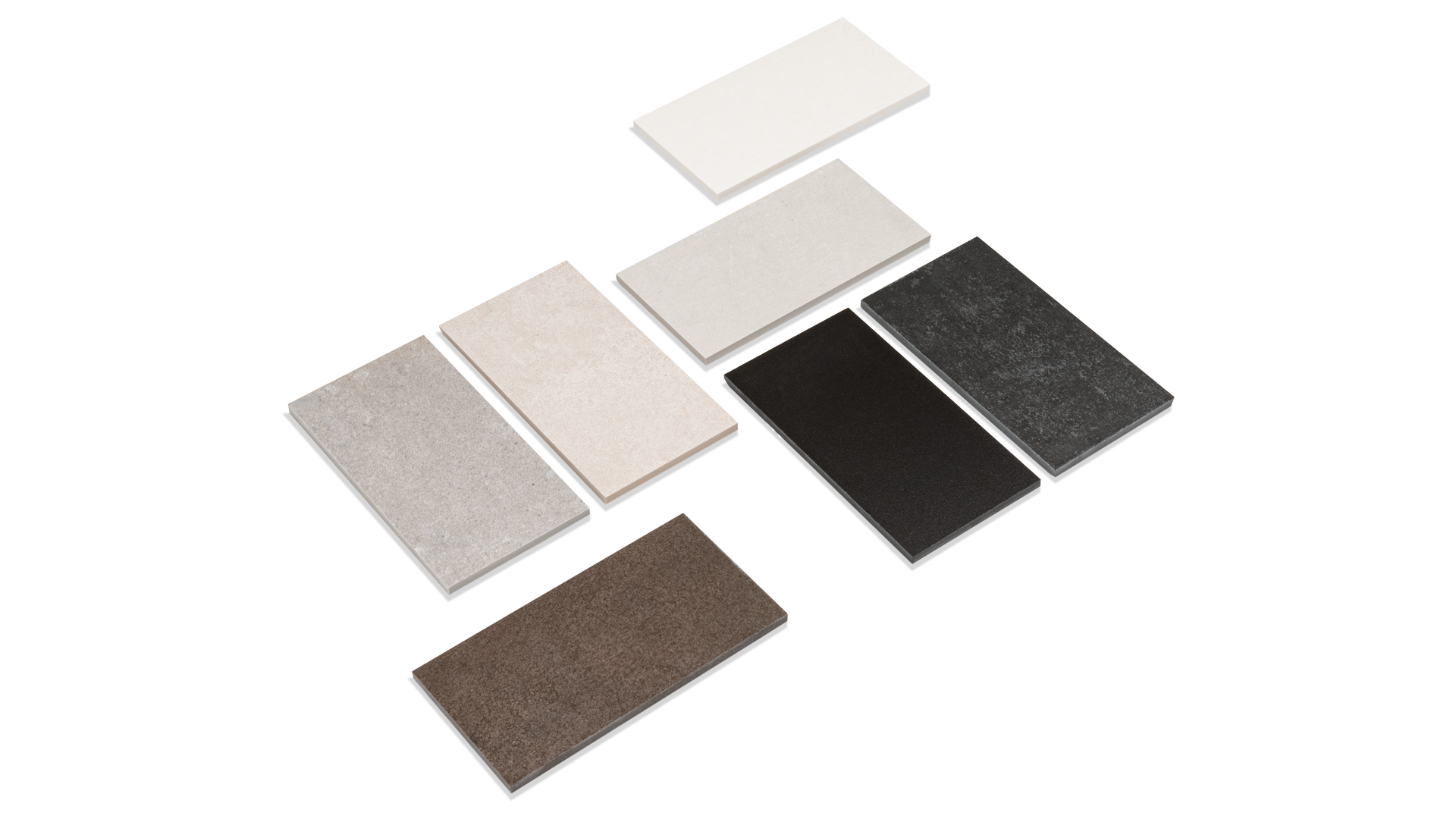
In this section, you can access images of the ceramic slabs. These files allow a detailed view of the material’s characteristics, including grain, texture, and natural color variations.
It is important to note that ceramic is a natural material: the grain and tones may show slight variations from one piece to another. This variability is not a defect but an intrinsic value of the material, giving each slab a unique character.
The images are therefore a technical and visual support tool, useful for selecting finishes and assessing aesthetic qualities, but they do not replace direct observation of the product.